An Interview with a KOL-Centric Global Medical Affairs Leader
Global Medical Affairs leader Michelle Warner on KOL-centric planning: building scientific engagement around each expert's interests and coordinating consistently across teams.
Key Takeaways
- KOL-centric planning starts from the needs and scientific interests of each external expert, then aligns them with the company's scientific objectives and unmet patient needs.
- A strong KOL relationship is a scientific, two-way relationship. Its success is judged by the expert's own view of the partnership, not by internal activity counts.
- One coordinated approach matters more than any single tactic: everyone who interacts with a KOL, including MSLs, Medical, Communications, Publications, and R&D, should understand the whole plan and their role in it.
- KOL-centric plans are tailored expert by expert, and can range from co-developing Medical Education to shaping congress communications or evidence-generation steering committees.
- Digital and social channels have widened the field of scientific influence, including Digital Opinion Leaders who shape how science is discussed online. Medical Affairs is a highly governed function, so engaging these voices takes both compliance discipline and a deliberate approach.
- Keeping Field Medical and cross-functional colleagues informed is a constant, conscious effort, so that the expert experiences one coherent scientific conversation across many touchpoints.
KOL-centric planning is an approach to scientific engagement that places the key opinion leader's own needs and scientific interests at the center of the plan, aligning them with a company's scientific objectives and unmet patient needs so that engagement advances shared goals.
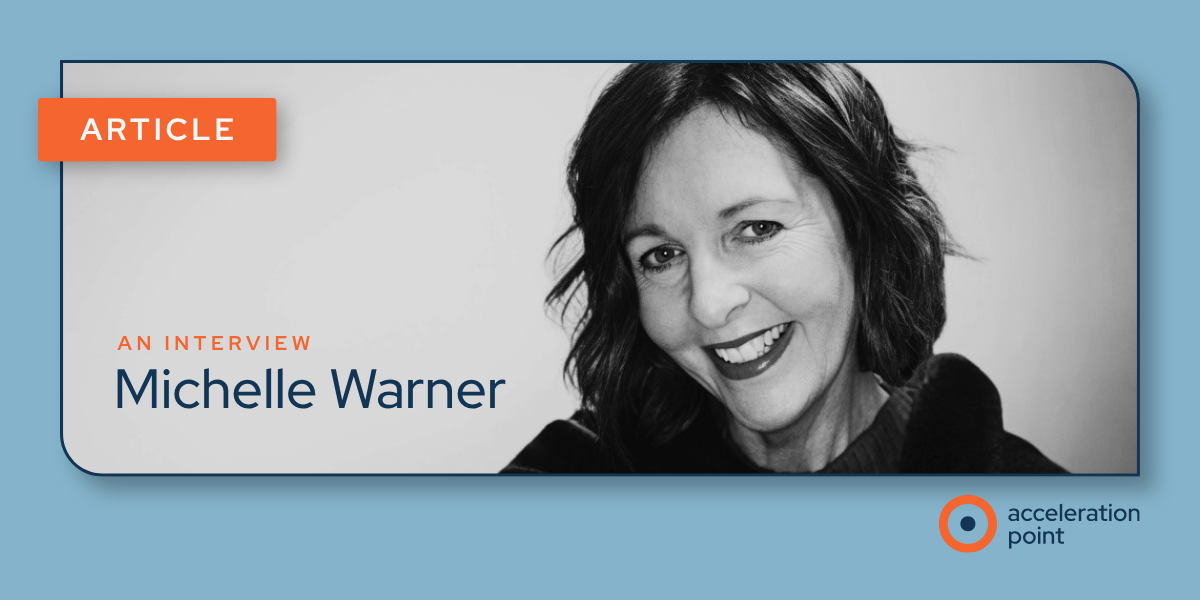
Acceleration Point spoke with Michelle Warner about what it means to keep key opinion leader (KOL) engagement centered on the expert. At the time of this interview, Warner led External Expert (KOL) strategy within GSK's Global Medical function; she is now an independent consultant after more than 25 years at GSK. Medical Affairs, the scientific arm of a life-sciences organization represented by bodies such as the Medical Affairs Professional Society, operates separately from commercial functions, and Warner returns throughout to one idea: scientific relationships work best when they are built around the expert's own interests and priorities.
You can connect with Michelle Warner on LinkedIn. Her responses below are presented in her own words.
What makes a global external-engagement team different?
Michelle Warner: I work in the global medical function at GSK, in the Specialty and Primary Care (SP&C) therapeutic area, and am part of a team fully dedicated to external engagement. Our purpose is to drive a consistently exceptional experience for our external stakeholders when engaging in GSK Medical activities. We work across many medicine teams, responsible for both marketed and pre-license assets, and whilst my role specifically is to lead on External Expert (KOL) strategy, the remit of the team encompasses our global congress, scientific communications, and engagement through digital channels. There are therefore many interdependencies. The benefit of such a team is that we are able to bring a consistent approach to these areas, all of which are key to high performance in Medical Affairs, and to join the dots, both internally and externally.
What does a great KOL relationship look like?
Michelle Warner: The first thing to say is that these are of course scientific relationships and that 2-way learning is the central purpose. Secondly, I judge the value based on the opinion of the Expert. I think success is about getting the basics right, having one clear and coordinated approach where the many individuals interacting with KOLs know the whole and understand their role. It sounds obvious, but when KOL insights are informing strategy and plans and, when appropriate, we are collaborating on the development and delivery of Medical Education, we know we have a strong scientific relationship. Developing and delivering on those plans together, working towards a common goal and purpose is key. Great examples include when Experts talk of their MSLs providing timely scientific updates in line with their interests at the same time as learning from others through discussion and debate around implications of key data – with peers and medicine leaders here at GSK. Indicators of a positive relationship include things like an endorsement of our approach to others, including professional organizations and KOLs keeping connected over time.
How do you define KOL-centric planning?
Michelle Warner: The starting point is to understand the needs and interests of those Experts, and then to be able to look at the opportunities, initiatives, and programs in our medical plans, and really start to bring those two things together. It's about finding that sweet spot between unmet patient needs, GSK's Scientific Objectives, and the interest area of the External Expert. The KOL-centric plan is then developed to ensure we are working on mutual areas of interest together, for the benefit of patients.
We have been fortunate in that we have access to satellite support and Pharmaspectra with up-to-date information on the scientific interests of Global Experts, what they are publishing, what they have presented on, clinical trials they are participating in, grants they have been given, etc. That is a great starting point from which to then move into conversations to truly understand an Expert's priorities.
KOL-centric plans are tailored and differ from Expert to Expert. For example, some plans may include the development of Medical Education materials, for others, it might be about communication of scientific data at a congress or co-chairing a Steering Committee focused on evidence generation plans. In short, the activities outlined in those Expert-centric plans are focused on KOL interests and our aligned Strategic Scientific Objectives. Everyone involved in delivering, reviewing, and revising those plans is contributing as appropriate. Those of us working in Global Medical SP&C must work closely with colleagues in R&D and Field Medical, and in a company the size of GSK, it is not always as easy as it sounds!
What are the challenges of coordinating global and local KOL engagement?
Michelle Warner: The biggest challenge is keeping one another updated, as well as keeping on top of the work KOLs are involved in – not only now in the traditional scientific journals, but also of course on Social Media. There is often a delicate strategic prioritization required to balance the medical engagement priorities at the country and above-country level – especially acute with the US and UK-based Experts. Furthermore, it is not just about working with MSL teams, there are other colleagues working in Communications and Publications who work closely with Global External Experts. The most challenging time can be during an International Scientific Congress when so much is happening in a really condensed time period. KOLS have challenging timetables and often wants to meet with some of the more senior leaders in the industry but will expect their MSLs to be fully aware of what is planned or takes place spontaneously. It is particularly important for us to be on 'speed dial' with some of our Medicine Development Leads in R&D or those working on the early science, to address some of the requests. Keeping Field Medical informed is something I have to make a really conscious effort to do.
This way, from the KOL's perspective, they are having one conversation, although through many different people, to advance science and ultimately outcomes for our patients.
What makes a great KOL experience?
Michelle Warner: KOLs want to understand a company's global medical strategy and to partner with us where appropriate to generate and communicate scientific evidence in the disease areas they are experts in.
Global Medical needs to work with the right Expert on the right science. When engaging with KOLs for a paid service, 1:1 consultancy / advice-seeking / media work, etc., we must ensure the end-to-end experience is positive. From contracting to a briefing to documentation through to payment. Any non-paid activity must be given the same 'white-glove' approach; the work required to ensure a highly professional, personalized experience needs to be prioritized over and above internal work that is going on.
It is an obvious point, but it is important for KOL insights to be actioned, and communicating this is important. They are extremely well networked with many of the professional societies, patient organizations, and of course the Pharmaceutical Industry more broadly, and can help ensure resources and collaborations are maximized.
How are digital and social media changing KOL engagement?
Michelle Warner: It is a really interesting and highly topical question as we are all trying to leverage the adoption of digital technologies in Medical Affairs. One of the things that we have been doing is trying to identify those digital scientific opinion leaders that are more active on social media.
There are a number of Digital Opinion Leaders, less well-known for their scientific contributions, but who are very active in sharing their opinions on data and science over LinkedIn, Twitter, and other social media sites. That is an area that all companies need to get better at understanding. We are a highly governed industry, rightly so, but in my opinion, we need to do more to embrace the potential with social media and connect with those that are shaping some of the ways in which the science and the data are being seen and patients are being treated.
What has your team's work with Acceleration Point involved?
Michelle Warner: It has been extremely valuable to bring a much more data-driven approach to our work with External Experts. Acceleration Point has worked with each of the different medicine teams to define their search criteria for EE identification and prioritization, to ensure the right experts are being profiled, and have also helped with being able to measure the impact of Medical Affairs. They have worked with us to support people's ability to use a database provided by Pharmaspectra, supporting our objective to work with the right experts on the right science. Acceleration Point has helped us to take a consistent approach, ensuring strategies are defined according to the stage in the lifecycle of the medicines we are working with. The expertise of Scott and the team to help inform the data to information / to insight / to actions is invaluable, especially for departments such as ours, working on multiple medicines often without up-to-date knowledge of the Global Expert community.
I would highly recommend Acceleration Point as an expert agency on KOL engagement to anyone wanting to drive a changed approach that will enhance and accelerate effectiveness in this space. Beyond work that is specific to identification and profiling, their service extends to helping find practical solutions that can be delivered at pace, such to co-ordinate an integrated KOL plan in line with the (appropriately) strict medical governance codes we adhere to in the Pharma Industry.
It is fantastic to be benefiting from the service level they provide, the flexibility, and subject matter expertise, and to work together to get those solutions implemented. Greatly valued for somebody who has such a broad remit, as I have.
How are scientific voice tools helping your team?
Michelle Warner: We have indeed. What is happening in the background is, and I imagine this is the case in all companies, is that our colleagues working in the commercial function are wanting us to better measure the impact of Medical Affairs. Significant investment is made, but do we know what difference it makes?
Acceleration Point's Share of Scientific Voice Tools with Pharmaspectra's data gives us the opportunity to analyze GSK's scientific contributions in comparison to the other in-class medicines from other companies. It gives a more objective measure/indicator of the scientific 'noise' of medicines within that disease area. In a way, I suppose it is like how the commercial teams review market share data.
Through this data, we are able to see what science is 'trending' through both publications and meetings, and we can drill down to better understand which meetings are hosting most of the science – a helpful data source for our congressing strategy. SoSV gives us access to all of the science and all of the people for that therapy area, globally, so is also an excellent complementary source of data on individual experts who are leading the communication of science in their respective fields. It has been really helpful, it's early days still, but a priority to really embed as we move through 2021.
Across the conversation, Warner describes work that is operational at its core: defining how external experts are identified and prioritized, bringing consistency to engagement planning across a portfolio, and measuring the contribution of Medical Affairs in scientific rather than commercial terms. That is the kind of infrastructure and process support Acceleration Point helps Medical Affairs teams put in place, so they can operate more effectively and within the governance their work requires.
Curious how this applies to your organization? Let's talk.
Frequently Asked Questions
What is KOL-centric planning in Medical Affairs? KOL-centric planning is an approach to scientific engagement that starts from each key opinion leader's own needs and scientific interests and aligns them with a company's scientific objectives and unmet patient needs. Rather than fitting experts into a fixed plan, the plan is built around mutual areas of scientific interest.
How is a KOL relationship different from a commercial relationship? A KOL relationship in Medical Affairs is a scientific relationship built on two-way learning and scientific exchange. Its value is judged by the expert's own view of the partnership and by whether insights inform medical strategy, not by commercial measures such as prescribing or sales.
What is a Digital Opinion Leader (DOL)? A Digital Opinion Leader is an expert who is active in sharing views on data and science through social and digital channels, and who may be less visible through traditional scientific publications. DOLs help shape how science is discussed online, which makes identifying and understanding them increasingly relevant to Medical Affairs.
Why does cross-functional coordination matter in KOL engagement? KOLs interact with many people across an organization, including MSLs, Medical, Communications, Publications, and R&D. Coordinating so that everyone understands the whole plan and their role in it lets the expert experience one coherent scientific conversation rather than many disconnected ones.
Further Reading:
- KOL Engagement: Components of a Successful Plan → https://www.accelerationpoint.com/resources/kol-engagement-components-of-a-successful-plan/
- What Is a Key Opinion Leader: Exploring KOLs in Medical Affairs → https://www.accelerationpoint.com/resources/key-opinion-leaders/
- Digital Opinion Leaders in Pharma: A C-Level Expert Interview → https://www.accelerationpoint.com/resources/digital-opinion-leader-expert/
- Rethinking Thought Leader Segmentation: A Modern Approach for Medical Affairs Teams → https://www.accelerationpoint.com/resources/rethinking-thought-leader-segmentation-a-modern-approach-for-medical-affairs-teams/
- Medical Affairs Engagement Strategies: A Guide → https://www.accelerationpoint.com/resources/adapting-medical-affairs-engagement-strategies/
Explore More Resources
Discover more insights, case studies, and podcasts from our team.
Browse All Resources