Avoiding the Insights Graveyard: Three Keys to Using AI on Insights Without Making It Worse
Scott Thompson breaks down three keys to using AI on Medical Affairs insights without making the graveyard bigger, none of which involve a better dashboard.
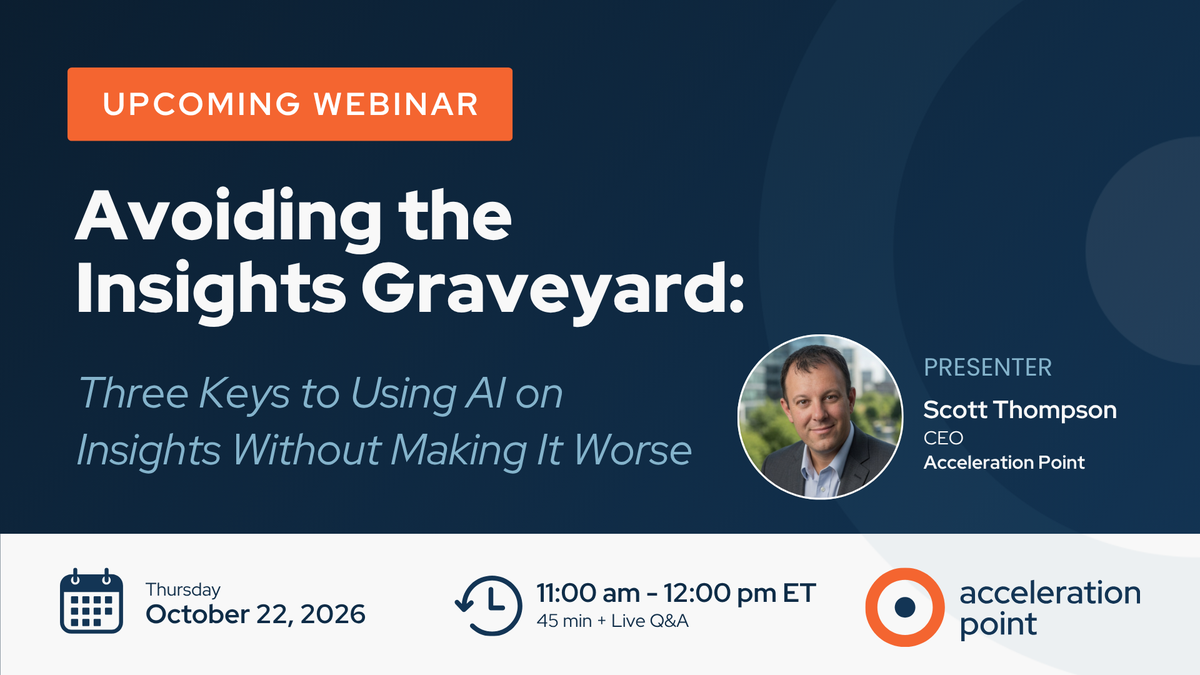
Upcoming Live Webinar
October 22nd, 11:00 am - 12:00 pm ET (45 min + Live Q&A)
Medical Affairs teams capture more insights than ever. AI now summarizes, themes, and dashboards all of it. Almost nothing changes. Most teams couldn't name three decisions their insights actually drove last quarter.
Scott Thompson (CEO, Acceleration Point) walks through three keys to using AI on insights without making the graveyard bigger, none of which involve a better dashboard. He covers how Key Intelligence Questions point AI at real decisions instead of just volume, how to route the same insight differently for a field director versus a CMO, and what it looks like to collect insights in a way that protects the signal instead of flattening it.
What You'll Learn
- A clear read on why KIQs exist to point AI at decisions, not to generate more reports
- A method for routing the same insight into different views for different roles
- What separates AI collection that sharpens the signal from AI collection that flattens it
- A framework for telling AI that drives change apart from AI that just organizes the graveyard better
About Acceleration Point Webinars
Acceleration Point webinars bring Medical Affairs and Field Medical leaders together to share practical insights, emerging strategies, and real-world perspectives on the challenges shaping the industry. Each session is designed to support the professionals driving scientific exchange, field medical excellence, and Medical Affairs transformation.
Explore More Resources
Discover more insights, case studies, and podcasts from our team.
Browse All Resources